Purpose
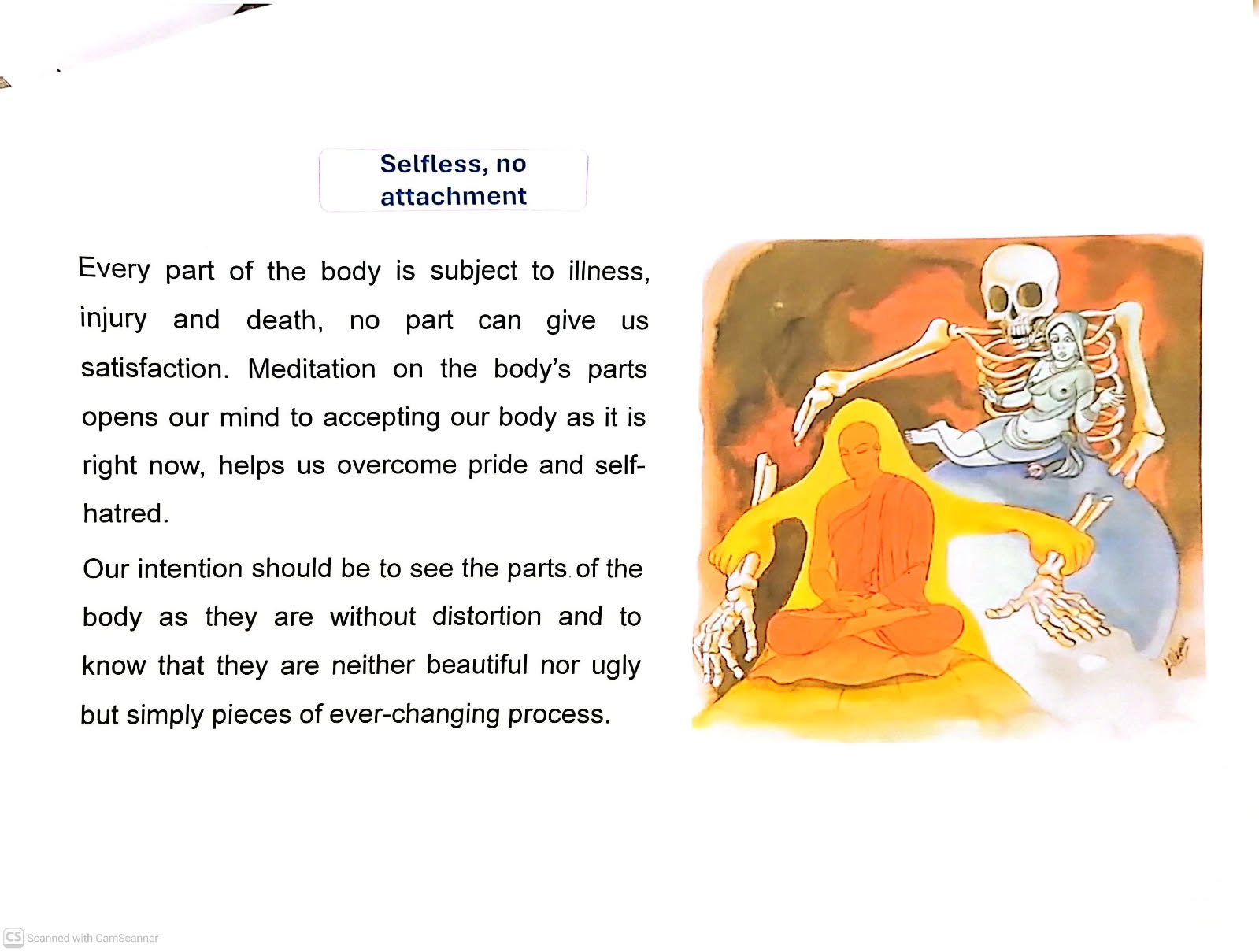
Meditation on the body’s parts is intended to help us see the body as it is—without distortion. Every part of the body is subject to illness, injury, and death, and no part can give lasting satisfaction. Practicing in this way can help us overcome pride and self-hatred, and support a mind of selflessness and non-attachment.
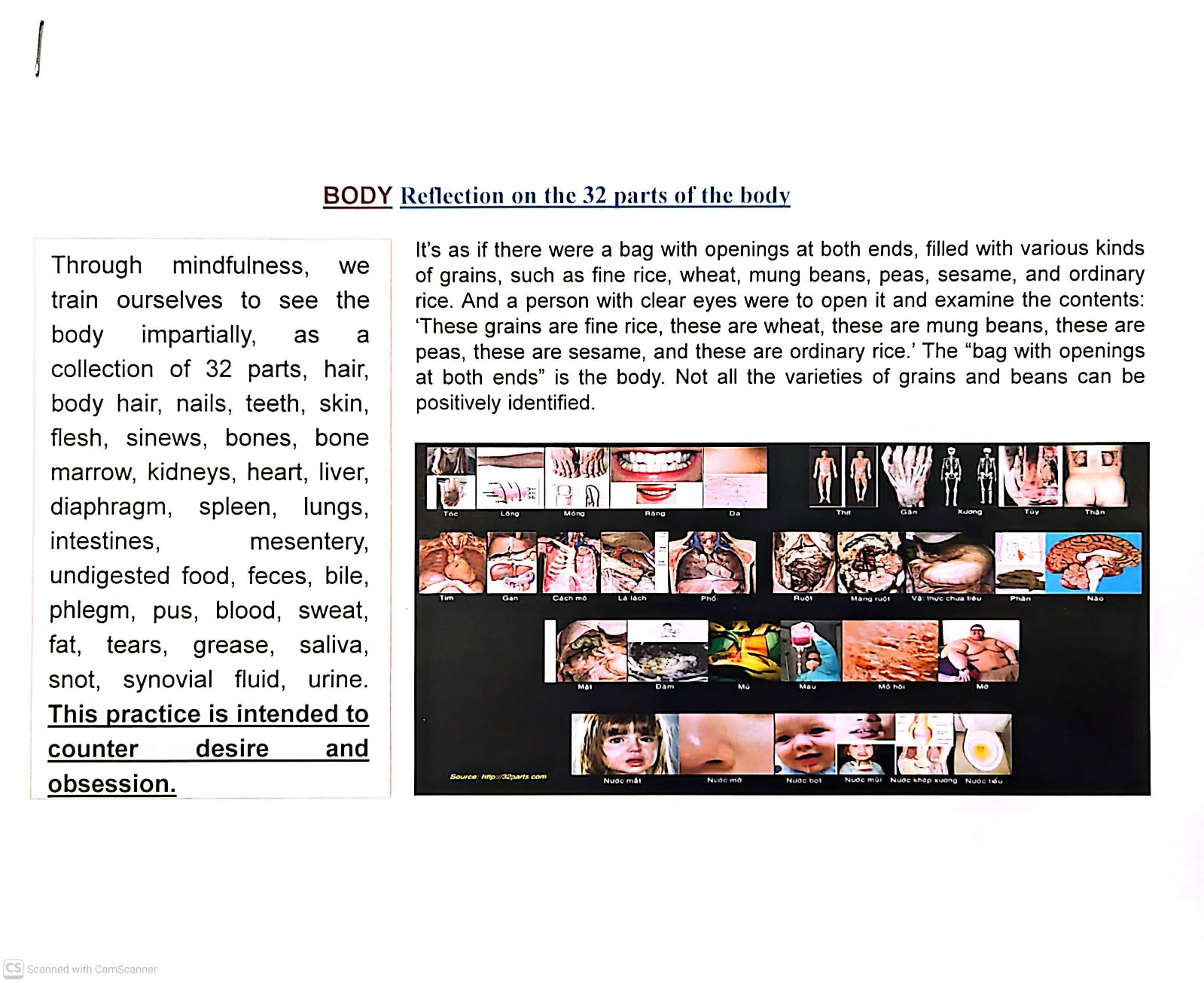
The “bag of grains” reflection
The body is compared to a bag with openings at both ends, filled with many kinds of grains and beans. With clear eyes, a person opens the bag and examines what is inside. In the same way, we examine the body clearly—recognizing its parts without confusion, fantasy, or obsession.
The 32 parts (as listed in the handout)
This practice is intended to counter desire and obsession.
- hair
- body hair
- nails
- teeth
- skin
- flesh
- sinews
- bones
- bone marrow
- kidneys
- heart
- liver
- diaphragm
- spleen
- lungs
- intestines
- mesentery
- undigested food
- feces
- bile
- phlegm
- pus
- blood
- sweat
- fat
- tears
- grease
- saliva
- snot
- synovial fluid
- urine
Working with resistance and attraction
At times, the mind may resist this practice. At other times, it may drift, analyze, or intellectualize.
These responses are natural.
When resistance arises, simply notice it as another condition. When attraction or aversion appears, see it as movement in the mind rather than a problem to fix.
The practice works through gentle repetition, not force.
Shared nature of the body
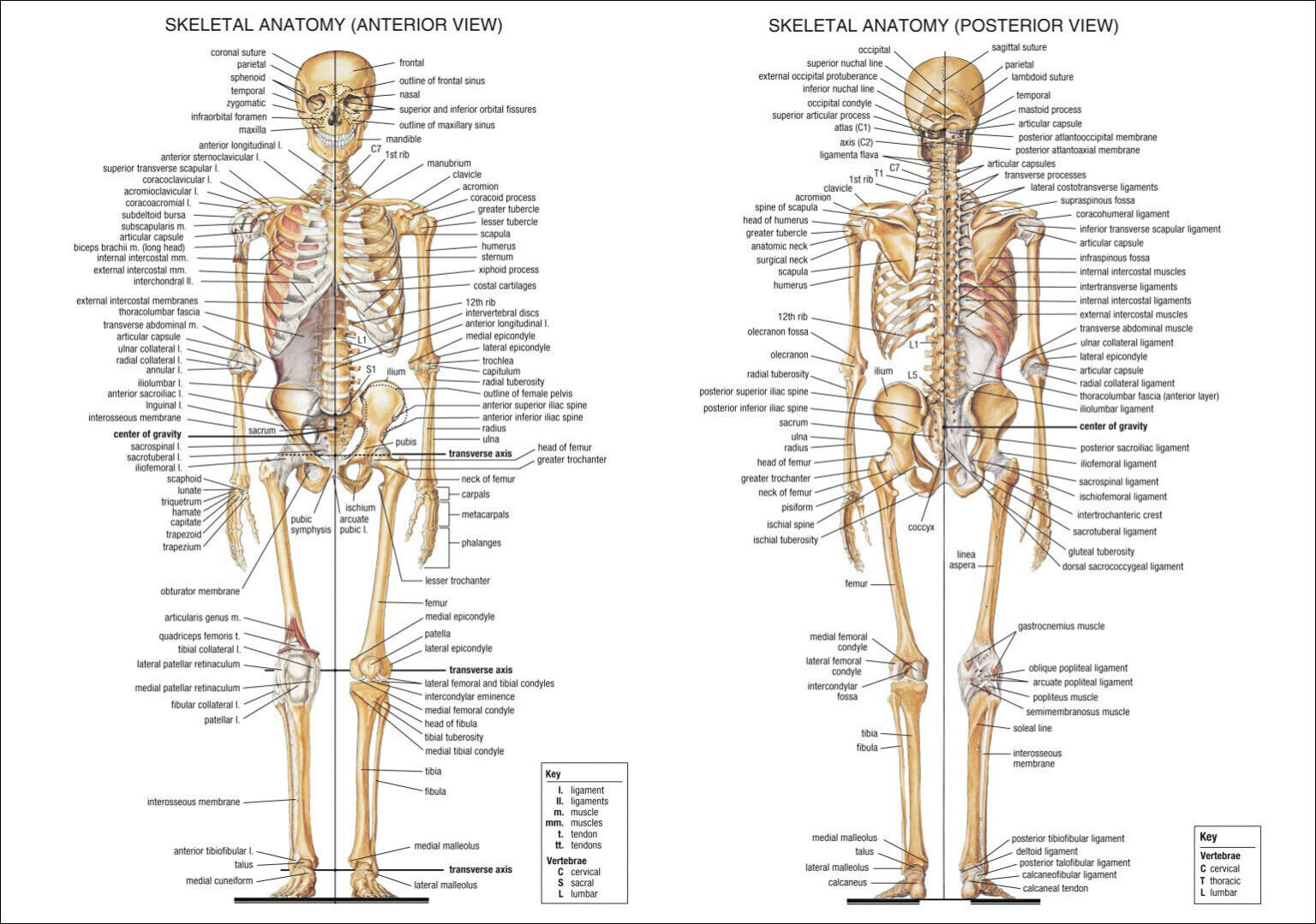
When we look beneath the surface, the differences we usually emphasize disappear. Under the skin, bodies are made of the same elements— the same organs, fluids, and processes.
Race, skin tone, age, and appearance belong to the outer layer. Below that, there is no division.
Seeing the body in this way can soften habits of comparison, judgment, and separation. What we take to be “self” and “other” is revealed as a shared condition.
This reflection supports not only non-attachment, but also humility and quiet respect for all beings.
Helpful reminders
- This is not meant to create aversion... only clear seeing.
- If you feel overwhelmed, return to breathing and body contact.
- Practice with kindness toward yourself.
Put it into practice
- Sit comfortably. Take a few natural breaths.
- Bring attention to the body as a collection of parts (not “beautiful” or “ugly”).
- Slowly recite or review the list of parts in your mind, gently and without strain.
- Notice any craving/aversion soften. Return to breathing when needed.